Our story
Picture this: late August 2023, a group of five friends gathered in a coffee shop, sipping Americanos, cappuccinos...

Picture this: late August 2023, a group of five friends gathered in a coffee shop, sipping Americanos, cappuccinos, and the occasional flat white. The conversation, as it often did, turned to work — specifically, the frustrations they had each experienced in managing client cash within the trust and corporate services industry.
What started as a casual catch-up quickly became something more. Ideas were scribbled on napkins. Phones were pulled out to look up data. Voices grew more animated as the group realised they were not just complaining about a problem — they were beginning to sketch out a solution.
This is the story of how Flinq was born.
Identifying the Market Gap
The group around the table had a collective experience spanning decades in trust administration, banking, technology, and financial services. They had seen the industry from every angle — as administrators managing client structures, as bankers providing accounts and services, and as technologists building systems to support financial operations.
One theme kept coming up: cash was being treated as a dead asset.
Between 2008 and 2021, interest rates were at historic lows. For many TCSPs, there was simply no incentive to actively manage client cash. Whether the money sat in a current account or a fixed deposit, the yield was negligible. Cash management was seen as an administrative overhead rather than a value-adding service.
But by mid-2023, the world had changed dramatically. Interest rates had risen sharply and significantly. Suddenly, the difference between cash sitting in a current account earning 0.5% and a notice account earning 4% was meaningful — potentially tens of thousands of pounds per client per year.
The group recognised that TCSPs were sitting on an enormous opportunity. Their clients collectively held billions in cash across thousands of bank accounts. If that cash could be managed more actively — placed in the right products, at the right banks, at the right time — the benefits would be transformational for both clients and the TCSPs themselves.
But there was a problem: no tool existed to do this effectively at scale.
Challenges in Cash Management
The challenges the group identified were not trivial. They had lived with them for years and understood their complexity intimately.
Fragmentation: Client cash was spread across dozens of banks, each with its own online portal, statement format, and reporting structure. Getting a consolidated view of cash positions required hours of manual work every day.
Manual Processes: Payments, reconciliations, and reporting were overwhelmingly manual. Spreadsheets were the tool of choice — flexible but error-prone, impossible to scale, and devoid of real-time visibility.
Banking Relationships: Each bank had different requirements for onboarding, reporting, and communication. Managing these relationships consumed significant time and resource, leaving little capacity for strategic cash management.
Regulatory Complexity: Operating across multiple jurisdictions meant navigating different regulatory frameworks, each with their own rules about client money, segregation, and reporting.
Lack of Technology: The technology solutions that did exist were either designed for large corporate treasuries (too complex and expensive for TCSPs) or for personal banking (too simple and lacking the necessary features). There was nothing purpose-built for the TCSP market.
The gap was clear. The opportunity was obvious. The question was: could they build something to fill it?
Conceptualising an Alternative Approach
Over the weeks that followed that initial coffee shop conversation, the group met repeatedly — in offices, over dinners, and yes, in more coffee shops. They mapped out the problem in detail, identified the key requirements, and began to design an approach.
The core principles were established early:
-
Simplicity: The solution had to be intuitive and easy to use. Administrators and treasury teams are busy people — they would not adopt a tool that added complexity to their already demanding roles.
-
Connectivity: The platform had to connect with banking partners seamlessly. Manual downloads and uploads were exactly the problem they were trying to solve.
-
Visibility: Real-time, consolidated visibility across all banks and all clients was non-negotiable. This was the foundation upon which everything else would be built.
-
Security: Given the sensitivity of the data and the regulatory environment, security had to be built in from the ground up, not bolted on as an afterthought.
-
Scalability: The solution had to work for a TCSP with 50 entities and scale seamlessly to one with 5,000. Growth should never require a platform change.
With these principles in place, the group began to flesh out the product vision — a cloud-based SaaS platform that would aggregate data from multiple banking partners, provide real-time cash visibility, enable optimised cash placement, and automate the reporting and reconciliation processes that consumed so much time.
Building the Solution
Ideas are easy. Execution is everything.
The group moved quickly from concept to prototype. Drawing on their combined expertise, they built initial prototypes that demonstrated the core functionality — banking data aggregation, consolidated dashboards, and cash placement recommendations.
They developed detailed business cases, modelling the potential impact on client yields and TCSP revenue. The numbers were compelling. Even modest improvements in cash placement could generate significant additional income for both clients and TCSPs.
Armed with prototypes and business cases, they approached their first client — a well-established TCSP that shared their vision and was willing to be an early adopter. Working closely with this client, they refined the platform, tested it in a live environment, and validated the assumptions they had made.
The results exceeded expectations. Cash that had been sitting idle was identified and placed in higher-yielding products. Reconciliation processes that had taken hours were completed in minutes. Reporting that had required manual compilation was generated automatically. The client was delighted, and the team knew they were onto something significant.
Formalising the Venture
With a working product and a satisfied first client, the time had come to formalise the venture. The group incorporated the company, agreed on the structure, and committed fully to building the business.
The name Flinq was chosen with care. Derived from the German word “flink,” meaning nimble, quick, and agile, it perfectly captured the essence of what they were building — a platform that enables TCSPs to manage client cash with speed, precision, and agility.
The name also reflected the team’s approach to building the business. They were nimble in their decision-making, quick to respond to client feedback, and agile in their development methodology. In a market dominated by large, slow-moving incumbents, Flinq’s speed and responsiveness would be a key differentiator.
Leadership and Roles
As the company took shape, the founders naturally gravitated towards roles that aligned with their strengths and experience.
In June 2024, Paul Fosse joined the board as a Non-Executive Director, bringing decades of experience in financial services and corporate governance. His appointment added significant credibility and strategic depth to the leadership team.
Each founder took on a specific area of responsibility:
- Strategic direction and client relationships — leading the overall vision and ensuring client needs remain at the centre of every decision.
- Technology and product development — overseeing the platform’s architecture, development, and continuous improvement.
- Operations and banking partnerships — managing the relationships with banking partners and ensuring seamless operational delivery.
- Commercial and business development — driving growth, managing partnerships, and building the Flinq brand in the market.
- Finance and compliance — ensuring the business operates within regulatory requirements and maintains financial discipline.
This distribution of roles ensured that every critical aspect of the business had a dedicated, experienced leader. It also meant that decisions could be made quickly, without the bureaucracy and politics that often slow down larger organisations.
The Birth of Flinq
From a conversation in a coffee shop to a fully operational platform serving real clients — the journey from idea to reality was remarkably fast. But it was not easy. It required late nights, difficult decisions, personal financial commitment, and an unwavering belief that the problem they had identified was real and that their solution was the right one.
What makes the Flinq story different from so many startup tales is the depth of domain expertise the founders bring. They did not read about the challenges of client cash management in a report — they lived them. They did not guess at what TCSPs needed — they had been TCSPs themselves. This firsthand understanding is embedded in every aspect of the platform, from the features it offers to the language it uses to the way it integrates with banking partners.
Flinq is more than a technology platform. It is the product of decades of collective experience, deep industry relationships, and a genuine passion for solving a problem that affects thousands of firms and their clients around the world.
The coffee shop conversations have not stopped, by the way. The team still meets regularly to discuss ideas, challenge assumptions, and dream about what Flinq can become. The napkins have been replaced by whiteboards and digital tools, but the spirit of those early conversations remains — curiosity, ambition, and a shared determination to build something exceptional.
Get in Touch
If our story resonates with you — if you recognise the challenges we set out to solve and want to learn how Flinq can help your firm — we would love to hear from you. Whether you are a TCSP looking to improve your cash management, a banking partner interested in connecting with our platform, or simply someone who wants to know more, please do not hesitate to get in touch.
The next chapter of the Flinq story is still being written, and we would love for you to be part of it.
Related posts

Flinq's journey from Product to Platform
From MVP to multi-capability platform—discover the lessons we learned turning vision into reality.
Read more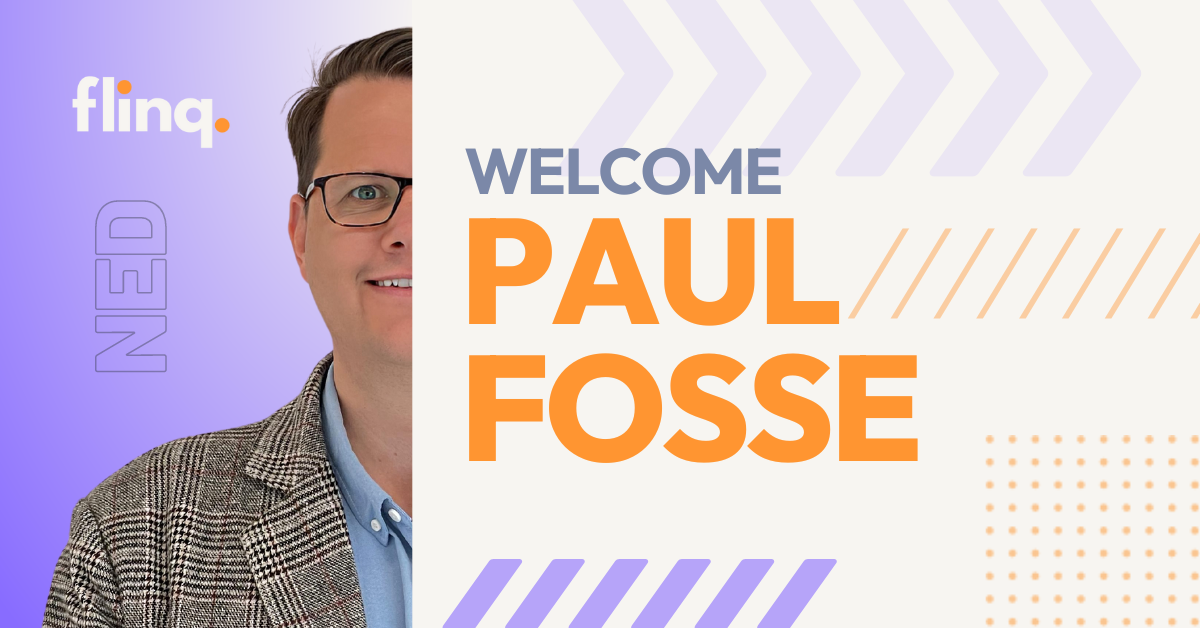
Why Joining Flinq as a NED Was an Easy Decision
We asked Paul Fosse about what made him join Flinq as a Non-Executive Director and this is what he had to say about it.
Read more